
Welcome to connectionshint. Positive words are an important part of everyday communication because they shape how we think, speak, and connect with others. When we use kind, encouraging, and uplifting language, we create a better atmosphere in conversations and build stronger relationships. These words are not just vocabulary items; they directly positively influence emotions and behavior.
In simple terms, positive words are words that carry good meanings, such as hope, respect, motivation, and appreciation. They are commonly used in daily life, education, workplace communication, and even on social media to express good feelings and support others. By learning and using positive words, anyone can improve their English communication skills and develop a more confident and optimistic way of expressing themselves.
What Are Positive Words and Why They Matter
Positive words are words that express good emotions, uplifting meanings, and encouraging ideas. They are used to describe people, actions, and situations respectfully and optimistically. These words help improve the tone of communication and make messages feel more friendly, supportive, and meaningful. Understanding positive words is important because they are a key part of effective English communication in daily life.
Simple Definition of Positive Vocabulary
Positive vocabulary means a set of words that carry good, kind, and encouraging meanings. These words are used when we want to describe something in a positive and respectful way instead of using harmful language. In simple terms, it is the type of language that helps us express good thoughts, appreciation, and positive feelings in daily communication. It is commonly used in speaking, writing, and professional communication to make messages more polite and effective.
For example, words like kind, honest, and helpful are used to describe good character. Words like excellent, amazing, and wonderful are used to describe positive experiences or achievements. Similarly, words like happy, joyful, and peaceful are used to express positive emotions. Overall, positive vocabulary helps us communicate clearly, build better relationships, and create a friendly and respectful impression on others.
Psychological Impact of Positive Language
The use of positive words has a strong impact on human psychology because language directly affects how we think and feel. When people hear or read uplifting and encouraging words, their mood often improves, and they start thinking in a more hopeful and confident way. Positive language helps reduce stress, lowers negative thinking, and increases motivation, which leads to better emotional balance and mental strength in daily life.
For example, encouraging words can boost a student’s confidence and help them perform better in studies or exams. Appreciative words can improve performance in the workplace by making employees feel valued and respected. Similarly, kind words can reduce misunderstandings, prevent conflicts, and improve relationships between people. This happens because the human brain naturally responds better to supportive and positive communication, creating a sense of safety, trust, and emotional comfort.
Role in Communication and Relationships
Positive words play a very important role in building strong communication and healthy relationships because the way we speak directly affects how others feel, think, and respond to us. When we use kind, respectful, and encouraging language, it creates a positive environment where people feel valued and understood. This improves the quality of communication and helps reduce misunderstandings in daily life.
In relationships, using positive words helps in many important ways. It builds trust and understanding between people, making it easier to share thoughts openly. It also improves teamwork and cooperation, especially in workplaces and group activities where mutual support is needed. Positive language strengthens friendships and emotional bonds by creating a sense of care and respect. Most importantly, it reduces arguments and negative feelings, helping people solve problems calmly and peacefully.
Read Also: positive adjectives
Benefits of Using Positive Words in Daily Life
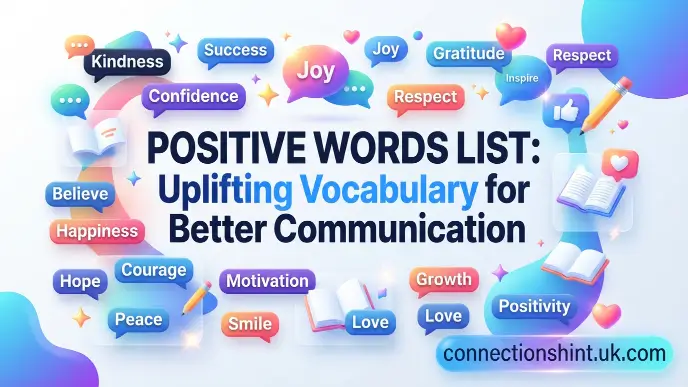
Using positive words in daily life brings many important benefits that support both personal development and social communication. These words help shape a more optimistic and confident mindset, allowing a person to think more healthily and constructively. When we consistently use positive language, it encourages better thoughts, stronger self-belief, and a more balanced emotional state. At the same time, positive words improve how we interact with others. They make communication more respectful, friendly, and understanding. This helps create stronger relationships and a more peaceful environment in everyday life. Over time, using positive language regularly leads to better behavior, improved communication skills, and more meaningful connections with people around us.
Improves Confidence and Mindset
Positive words play a very important role in improving confidence and mindset because they directly influence how we think about ourselves. When a person regularly uses uplifting and encouraging language, it slowly changes their inner thoughts in a positive direction. Instead of focusing on mistakes or weaknesses, the mind starts focusing on strengths, improvement, and possibilities. This helps reduce self-doubt and builds a stronger and more confident personality over time.
Key Points:
- Positive words improve self-confidence and self-belief.
- They reduce negative thinking and self-doubt
- They encourage a more hopeful and motivated mindset
- They help replace negative thoughts with positive ones
- They improve mental strength and focus in daily life
- They support better decision-making and emotional balance
Strengthens Relationships
Positive words are very important for building strong and healthy relationships because they shape how we treat and understand each other. When a person speaks kindly, respectfully, and in an encouraging way, others feel respected, valued, and emotionally safe. This creates a strong sense of trust and helps build deeper emotional connections between people.
Key Points:
- Positive words help build trust and understanding in relationships
- They make people feel respected, valued, and emotionally supported
- They strengthen emotional bonds between family, friends, and coworkers
- They reduce misunderstandings and communication gaps
- They improve cooperation and mutual respect
- They help create long-lasting and healthy relationships based on care and kindness.
Enhances Professional Communication
In the workplace, positive words play an important role in improving communication and teamwork. When employees and managers use respectful and encouraging language, it creates a positive and professional environment where everyone feels valued and motivated. This type of communication helps people work together more smoothly and understand each other better.
Key Points:
- Positive words improve workplace communication and clarity
- They create a friendly and professional working environment
- They increase motivation and make employees feel appreciated
- They reduce conflicts and misunderstandings among team members
- They improve teamwork, cooperation, and coordination
- They increase productivity and overall workplace success
Creates Emotional Positivity
Using positive words regularly helps create emotional positivity in daily life because the way we speak directly affects our thoughts and feelings. When we use kind, encouraging, and supportive language, it reduces stress and helps the mind stay calm. This type of communication builds a peaceful mindset and makes it easier to handle difficult situations without feeling overwhelmed.
Key Points:
- Positive words reduce stress and negative thinking
- They promote calmness and a peaceful mindset
- They help people stay emotionally balanced in difficult situations
- They improve mental well-being and emotional strength
- They build a more positive and hopeful outlook on life
- They support long-term emotional health and inner peace
Categories of Positive Words
Positive words are divided into different categories based on how they are used in daily communication. Each category serves a special purpose, such as motivating people, describing qualities, encouraging others, or improving professional communication. Understanding these categories helps us use positive words more effectively in speaking and writing, making our communication clearer, more respectful, and more impactful in both personal and professional life.
Motivational Positive Words
Motivational positive words are words that help inspire people to take action, stay focused, and work toward their goals. These words create a strong sense of energy, hope, and confidence in a person’s mindset. They are often used in motivational speeches, self-improvement content, and goal-setting conversations because they push people to keep moving forward in life with determination and a positive attitude.
These words are powerful because they can change negative thinking into positive action. When a person hears motivational language, they start feeling more confident in their abilities and more willing to face challenges. This kind of positive influence helps people stay strong during difficult times and encourages them not to give up easily, even when situations become tough.
Descriptive Positive Adjectives
Descriptive positive adjectives are words that describe the good qualities of people, objects, or situations in a positive and uplifting way. These words help make communication clearer, richer, and more meaningful by focusing on the best and most positive aspects of something. Instead of using neutral or negative language, these adjectives highlight strengths, good behavior, and pleasant qualities.
These words are commonly used in writing, storytelling, and everyday conversation because they make language more expressive and attractive. By using positive adjectives, we can describe people and situations respectfully and encouragingly. This not only improves the quality of communication but also creates a friendly and positive tone that leaves a good impression on others.
Encouraging and Supportive Words
Encouraging and supportive words are used to uplift others and give them emotional strength. These words help people feel valued, respected, and emotionally supported, especially when they are going through difficult situations or facing challenges. By using this type of language, we can boost confidence in others and help them stay motivated and positive in their actions.
These words are very important in schools, workplaces, and personal relationships because they build trust and stronger emotional connections between people. When we use supportive language, it reduces stress, improves understanding, and creates a positive environment where everyone feels heard and appreciated. Over time, this kind of communication helps build healthier and more meaningful relationships in both personal and professional life.
Professional Communication Words
Professional communication words are used in formal settings such as offices, business meetings, reports, and workplace emails. These words help maintain a respectful, clear, and positive tone when interacting with colleagues, clients, or managers. In simple terms, they make communication more organized, polite, and easy to understand in a professional environment.
These words are very important because they improve teamwork and reduce misunderstandings at work. When people use clear and positive language, it becomes easier to share ideas and complete tasks smoothly. Professional positive words also help build strong working relationships, increase trust among team members, and create a more productive and efficient workplace environment.
How to Use Positive Words in Sentences
Using positive words correctly in sentences is very important because it helps improve communication in daily life. When we use uplifting and encouraging language in speaking or writing, it makes our message clearer, more respectful, and more meaningful. Learning how to apply positive words in real situations helps build confidence and improve overall English communication skills.
Daily Conversation Examples
In daily life, positive words are used to make communication more friendly, respectful, and meaningful. When we speak in a kind and uplifting way, it improves the way people feel and respond to us. These words help create a better understanding between family, friends, and others around us. Instead of sounding harsh or negative, positive language makes conversations smoother and more comfortable. It also helps build trust and strengthen relationships in everyday interactions.
For example, simple sentences like “You did an amazing job today” or “That was a great idea, well done” show appreciation and encouragement. When we describe someone as kind or helpful, it makes them feel valued and respected. In this way, positive words improve communication, spread good energy, and make daily conversations more pleasant and supportive for everyone.
Writing and Email Usage
In writing and emails, positive words are very important because they create a polite, respectful, and professional tone. When we use encouraging and appreciative language, our messages sound clearer and more well-mannered. This not only improves communication but also leaves a good impression on the reader, especially in formal situations like business emails, reports, or workplace communication. It shows that we value others’ efforts and contributions.
For example, sentences like “Thank you for your excellent support,” “We appreciate your valuable feedback,” and “Your team did a very efficient job” show respect and appreciation. Using positive words in emails helps build stronger professional relationships, reduces misunderstandings, and makes communication more effective and trustworthy in the workplace.
Social Media Communication Tips
On social media, positive words are very useful because they help create friendly, engaging, and uplifting content. When people use positive language in their posts, it makes their messages more attractive and enjoyable to read. It also spreads good energy among followers and encourages a more supportive and respectful online environment. Instead of negativity, positive words help promote hope, kindness, and motivation in digital communication.
For example, posts like “Feeling grateful and blessed today,” “What a wonderful experience!” and “Stay positive and keep moving forward” show how simple positive language can inspire others. Using positive words on social media also helps build a strong and good online presence, increases engagement, and encourages meaningful interactions with people from different backgrounds.
Common Mistakes When Using Positive Vocabulary
While using positive words is very helpful for improving communication, many learners make some common mistakes. These mistakes can reduce the natural flow of language and make communication less effective. Understanding these errors helps you use positive vocabulary in a clearer, more natural, and more meaningful way in both speaking and writing.
Overusing Complex Words
One common mistake when using positive words is overusing difficult or complex vocabulary. Many learners think that advanced words always sound more impressive, but in reality, they can make communication confusing and unnatural. Instead of improving the message, too many complex words can reduce clarity and make it harder for others to understand what you mean. Simple and clear positive words are usually more effective because they sound natural, are easy to understand, and improve everyday communication.
Key Points:
- Overusing complex positive words makes communication difficult to understand
- It can make sentences sound unnatural and confusing
- Simple positive words are more powerful and effective
- Clear language improves communication and understanding
- Natural vocabulary is better for daily use and conversation
Using Words Without Context
Another mistake when using positive words is using them without proper context. Every word has a specific meaning and should be used in the right situation to make sense. When positive vocabulary is used randomly or without understanding the context, the sentence can become confusing, unnatural, or even incorrect. For example, using a word like “excellent” in a situation where it does not fit may sound strange and reduce the clarity of communication. That is why it is important to always understand the meaning of each word and use it in the correct place so the message remains clear, meaningful, and accurate.
Key Points:
- Positive words must be used according to the correct situation
- Random use can make sentences confusing or unclear
- Wrong context reduces the natural flow of communication
- Proper usage improves clarity and meaning
- Understanding word meaning is important for correct communication
Lack of Natural Tone
Many learners also struggle with keeping a natural tone while using positive words or positive vocabulary. Sometimes, sentences can sound forced, artificial, or unnatural when too many positive words are added without balance. This happens when people try too hard to sound positive instead of speaking simply and naturally. A natural tone is very important because it makes communication smooth, clear, and realistic. When positive words are used naturally in speech or writing, they feel like a normal part of communication rather than something added only for effect. Keeping language simple, balanced, and natural improves overall communication quality and makes your message more effective and easier to understand.
Key Points:
- Overusing positive words can make sentences sound unnatural
- Forced language reduces clarity and smooth communication
- Natural tone makes speech and writing more realistic
- Positive vocabulary should be used in a simple and balanced way
- Natural usage improves overall communication quality
Tips to Improve Your Vocabulary
Improving your vocabulary, especially learning more positive words, is very important for developing strong communication skills. A good vocabulary helps you express your ideas in a clear, confident, and effective way in both speaking and writing. When you know more words, it becomes easier to choose the right expression for different situations, which improves the overall quality of your communication.
Reading Habits for Vocabulary Growth
Reading is one of the most effective ways to improve your vocabulary, especially when learning positive words. When you regularly read books, articles, or blogs, you naturally see new words used in real situations, which helps you understand their meaning and correct usage. This improves your ability to use positive vocabulary in both speaking and writing. Reading also strengthens your understanding of sentence structure and makes it easier to remember new words because you see them in a practical context instead of just memorizing them.
Key Points:
- Reading helps you learn new positive words naturally
- It shows how words are used in real situations
- It improves the understanding of sentence structure
- It helps you remember vocabulary for a long time
- It improves both speaking and writing skills
Practice Writing Daily
Daily writing practice is very important for learning positive words because it helps you actively use new vocabulary instead of just reading or memorizing it. When you write sentences or short paragraphs every day, you practice forming your own ideas using positive vocabulary, which improves your understanding of how these words work in real communication. This habit also helps you remember words for a longer time because you are repeatedly using them in meaningful sentences. Over time, it builds confidence, improves sentence structure, and makes your writing and speaking clearer and more effective.
Key Points:
- Daily writing helps you practice positive words regularly
- It improves the understanding of how words are used in sentences
- It helps you remember vocabulary for a long time
- It builds confidence in using new words correctly
- It improves writing clarity and communication skills
Learning Word Families
Learning word families means understanding the different forms of the same root word. For example, one root word can have different forms, such as a noun, a verb, an adjective, or an adverb. This helps you see how a single idea can be expressed in multiple ways using different positive words. It is a very effective method for building a strong vocabulary because it connects words in a logical way.
Key Points:
- Word families show different forms of the same root word
- They help expand vocabulary faster
- They make it easier to use positive words in different sentences
- They improve speaking and writing skills
- They increase flexibility and confidence in communication
Using Words in Real Conversations
Using new vocabulary in real conversations is one of the most effective ways to improve your language skills, especially when learning positive words. When you actively use new words while speaking with others, you understand their meaning better and remember them for a longer time. This real practice helps you move beyond memorization and allows you to use positive vocabulary naturally in daily life, which builds strong communication skills.
Key Points:
- Using positive words in real conversations improves learning
- It helps you remember vocabulary for a longer time
- It builds confidence in speaking
- It improves fluency and natural communication
- It makes speech clearer, smoother, and more effective
Frequently Asked Questions
What are positive words in English?
Positive words are words that carry good, uplifting, and encouraging meanings. They are used to express kindness, appreciation, motivation, and respect in communication.
Why are positive words important in daily life?
Positive words are important because they improve communication, build stronger relationships, reduce negativity, and create a friendly and respectful environment in both personal and professional life.
How can I improve my use of positive vocabulary?
You can improve by reading regularly, writing daily sentences, learning word families, and using positive words in real conversations. Practice is the key to improvement.
Where can we use positive words?
Positive words can be used in daily conversation, writing, emails, workplace communication, social media posts, and speeches to make messages more effective and respectful.
Do positive words really affect communication?
Yes, positive words strongly affect communication. They make messages clearer, more polite, and more impactful while also improving the emotional connection between people.
Conclusion
Positive words play a very important role in improving communication, building confidence, and creating better relationships in daily life. They help us express our thoughts in a clear, respectful, and encouraging way, whether we are speaking, writing, or interacting on social media. By using positive vocabulary, we can create a more friendly and supportive environment around us.
Overall, learning and practicing positive words regularly can improve both personal and professional communication skills. It not only strengthens vocabulary but also develops a more optimistic mindset and better emotional understanding. Making positive words a part of daily communication leads to more meaningful, respectful, and effective interactions with others.