
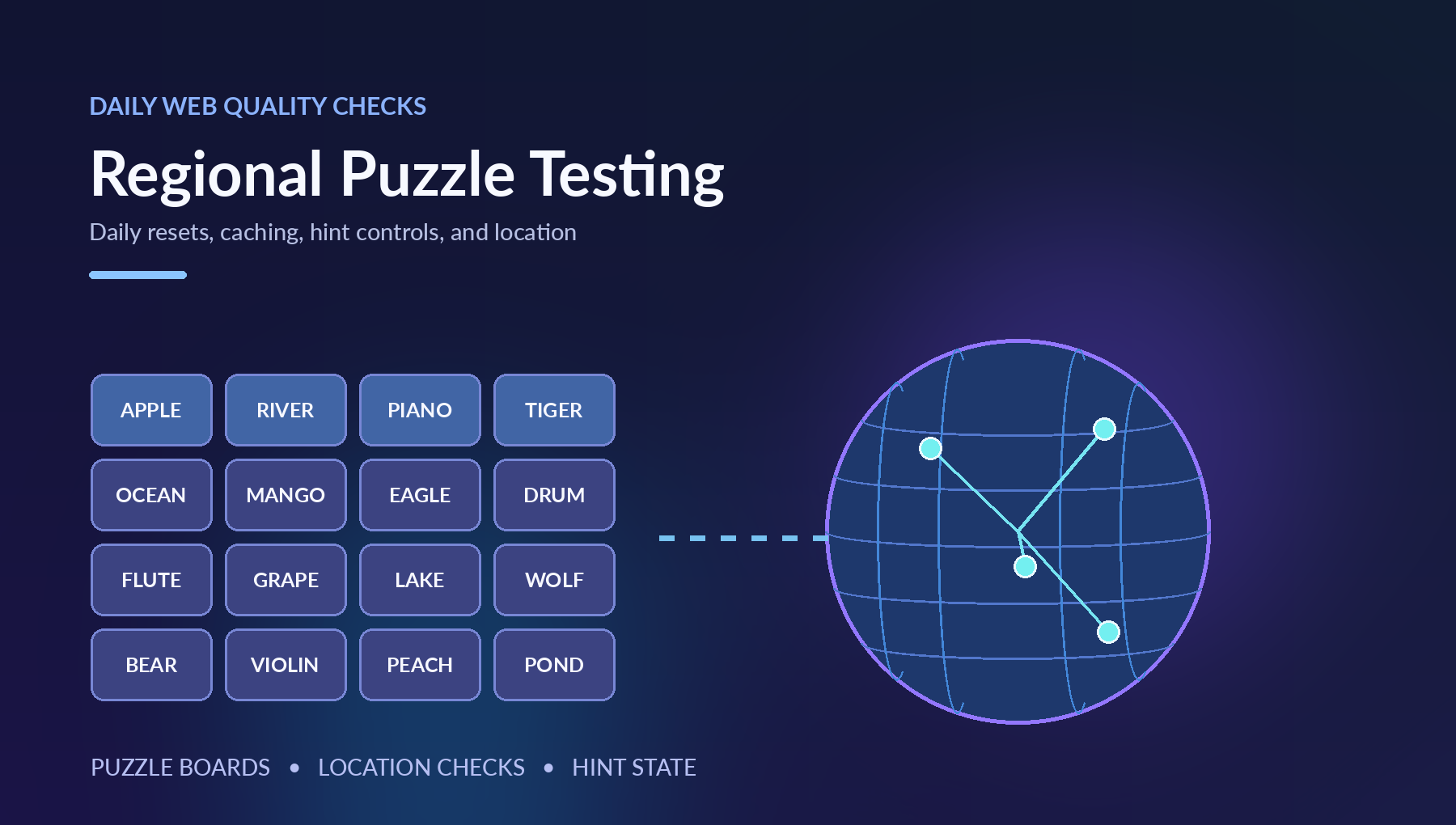
This Spaceproxy review 2026 considers a specific technical task: checking a daily puzzle website from different regions. A page may show a new word grid, an older cached version, or a different hint state depending on timing and local settings. Those differences can confuse readers and make site maintenance harder.
Regional checks help publishers catch such issues before a new puzzle becomes widely visible. A proxy can provide an alternative network exit for a permitted test. It does not control the website’s clock, account state, or cache rules, so careful comparisons remain necessary.
Spaceproxy Options for Puzzle Website QA
Spaceproxy catalog contains static IPv4 and IPv6 proxies, with options to choose the geographical sites. Its site includes details HTTP and SOCKS5 connection formats, manual address selection and an account dashboard. Such features may enable controlled audits of public puzzle pages in certain regions.
If the same test requires a stable exit point to perform repeated observations, then having a fixed IPv4 address can be advantageous. Shared IPv4 could be cheaper, but the traffic from another client could influence how a website treats that address. IPv6 is only useful if the destination and checking program support it.
A fixed proxy changes the network path, not the browser’s local settings. For meaningful results, record the actual exit IP, language, timezone setting, device type, and time of each request. Otherwise, differences may be attributed to location when another variable caused them.
What Can Go Wrong With a Daily Puzzle Page
Daily word games often publish fresh content on a schedule. A reader might see an older board because a cache has not refreshed or a browser has stored a previous response. A publisher should distinguish those faults from normal differences between timezones.
Hint pages add another complication. Some visitors want a gentle category clue, while others choose to reveal the full answer. Testing should verify that the selected hint level remains consistent after page reloads, navigation, and allowed regional requests.
A cached answer can be more serious than a cached heading because it may reveal material from the wrong day. Comparing the visible puzzle date, word list, and answer controls is more informative than checking only the response code. A successful HTTP response can still deliver outdated content.
A Repeatable Daily Checks Checklist
Start with one reference browser in a known state. Save the expected puzzle date and a small set of visible page elements. The goal is to detect differences, not to bypass site restrictions or collect private player information.
- Open a public puzzle page directly and record the displayed date and board state.
- Repeat the request through one permitted proxy exit in the chosen region.
- Compare the date, words, hint controls, and final page URL after any redirects.
- Reload with a clean browser profile and note cache-related response headers.
- Repeat near the scheduled daily change, then record any unexpected differences.
Avoid changing several test inputs at once. If the browser language, location, and session cookies all change, the result will be harder to explain. A small, controlled matrix gives developers a clearer starting point.
Region, Timezone, and Cache Are Separate Variables
A proxy exit in another country may change the apparent client IP. It does not automatically change the operating system clock or JavaScript timezone in a browser. A test script must configure these settings separately when the application uses them.
Content delivery networks may also serve cached copies from different edge locations. A mismatch between two responses may originate from cache invalidation rather than the application itself. Log cache headers when the server exposes them and compare the responses again after the intended refresh.
Publishers should document the precise rule for changing the daily puzzle. Does the site reset at one global time or at local midnight for each visitor? Without that definition, two correct implementations can appear inconsistent during a regional comparison.
Mobile Layout and Hint Controls
Many puzzle readers use phones, so regional QA should include a narrow viewport as well as a desktop browser. A sixteen-tile word grid needs readable labels and clear touch targets. Check that category hints and answer controls remain visible without overlapping other elements.
A proxy does not simulate mobile hardware. Screen size, touch input, browser version, and network throttling need separate test settings. The useful practice is to keep those settings constant while changing only the network exit.
Test the same public page before and after revealing a hint. A change in network route should not unexpectedly expose a stronger clue or replace the current word set. Record such problems as application behavior, not as a proxy performance failure.
Costs and Limits of Proxy-Based Checks
According to its public pages, Spaceproxy offers rentals starting at one IP for brief periods. The order is based on the address category, geography, number and term you pick. It is better to do a little controlled check than to buy a lot of addresses before you determine whether the client is suitable.
The supplier advertizes account utilities and IP-check tools. These can allow you to find an exit address or troubleshoot connection settings. However, they can’t verify a puzzle page refreshes successfully and can’t replace observation of the actual material.
Some sites do not allow automated requests, or limit access under their terms of service. Follow these regulations and don’t make too many requests. A blocked test should be documented and reviewed and not automatically retried with different addresses.
Final Assessment
Spaceproxy publishes fixed-proxy options that may fit permitted regional checks of daily puzzle sites. The value lies in comparing known page states from controlled network exits, especially around daily resets and cache updates. Real connection reliability remains unverified here; the strongest evidence comes from a limited, documented test of the intended site.